The Madame Butterfly Effect

TODAY I RESCUED a damsel in distress.

A beautiful specimen of the Acraea Horta butterfly — native to South Africa and Zimbabwe — was floating, nearly lifeless in the deep end of a swimming pool. She was definitely in over her head.

I ran into the little lady — the females are identified easily since they have one set of translucent wings — while doing my daily laps. At first, I thought she had already met her Maker as she helplessly bobbed with the waves. I gently placed my hand under the water and slowly scooped the small creature out and placed her on the bricks bordering the pool.
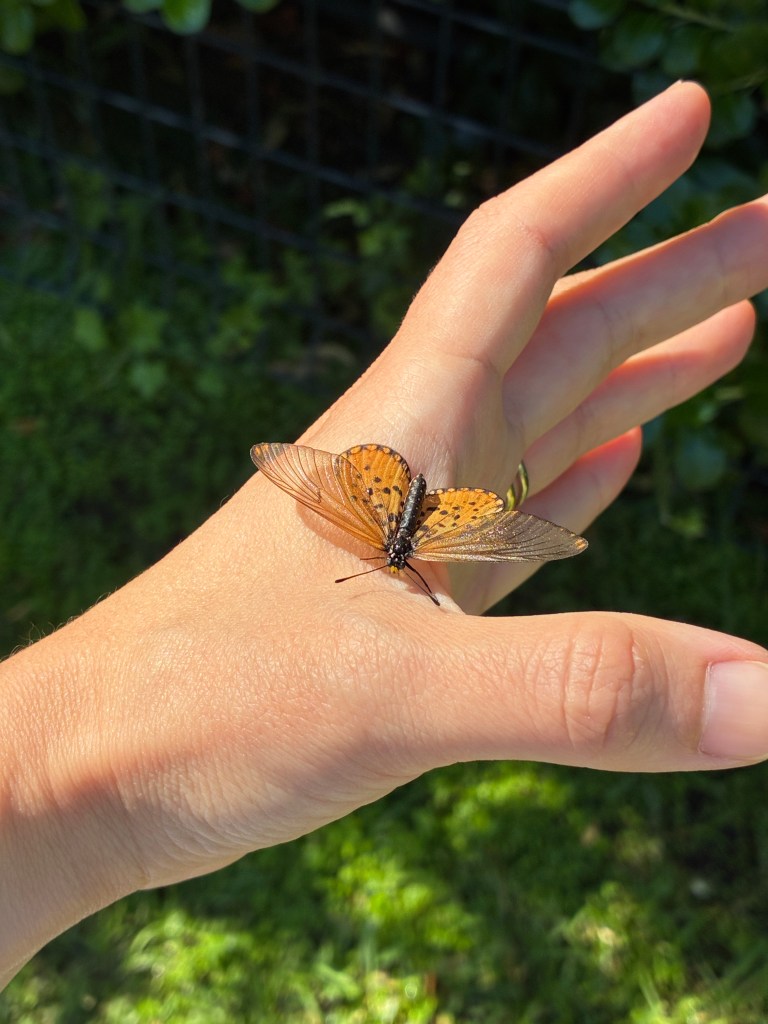
A female Acraea Horta or Garden Acraea butterfly, native to Zimbabwe and South Africa. The females have one set of translucent wings.

She lay there, immobile, but then showed a hint of life left with a twitch of her antennae. I have encountered many a bee while swimming and learned through trial and error that they need not only to be transported to dry land, they also require a kind of CPR. To be sure, you can’t press on their thorax or abdomen to expel water from their tiny lungs, since they have no lungs. And they wear their skeleton on the outside, so any force applied would result in a very crunchy experience. It goes without saying that mouth-to-mouth resuscitation is inadvisable. 

But what they do need is to dry their wings. This presents the diminutive beings with a conundrum. They are essentially paralyzed because their wings are so waterlogged they cannot extend them to dissipate the liquid residue.

So with today’s patient, I applied my form of insect resuscitation, pursing my lips and exhaling a steady stream of breath on its aerial appendices. At first, she didn’t seem to react, and then I detected movement again in the antennae. With each breath, I saw a bit more animation, until the wings began to flutter just slightly. After a dozen or so times, the wings extended out to their farthest range. 

It was a touching moment. We seemed, Madame Butterfly and I, to be communicating in a kind of sign language.

Me: “Whoosh.” 

Mme. Butterfly: “Again, please.”

Me: “Whoosh.”

Mme. Butterfly: “And now a little to the left, thanks.”

The prognosis for a full recovery looked good, but she was still too soaked to achieve liftoff. My better half, Sherry, was reading poolside and so I called for her to take over. The creature rested comfortably upon Sherry’s hand for a while, drying in the warm South African sun. After just a few minutes, the butterfly was able to flutter by, soaring once again. And I swear I could hear strains of Puccini’s “Un bel dì, vedremo” in my head. Indeed, Madame Butterfly, one fine day we’ll see.

Of course​ this was a very happy, feel-good moment. It reminded me of all those random-act-of-kindness YouTube videos in which a baby deer that has fallen through the ice into some frigid lake waters is rescued by a group of fishermen, or a baby elephant that is struggling to climb the muddy bank of a crocodile-infested river is tenderly scooped up by a guy with a backhoe, or a beached dolphin that is entangled in a fishing net is emancipated by some beach goers, who then lovingly nudge the grateful fellow back into the waters.

All so heart warming and such a resolute reaffirmation that deep down, humans are good.


Our paradoxical role in nature

WE, AS HUMANS, relish our role as the superior species. The Abrahamic faiths — Islam, Christianity, Judaism — all believe in the collection of stories known as Genesis, specifically Chapter 1, Verse 26, where it is written that our job is to:

“…rule over the fish in the sea and the birds in the sky, over the livestock and all the wild animals, and over all the creatures that move along the ground.”

Hinduism, Buddhism, and Janism all subscribe to the concept of Karma, that what goes around comes around. And since their collective belief also includes reincarnation and the possibility that any one of us can return to the physical world as any one of the millions of other species on the planet, best to be nice to all creatures big and small, if even for selfish — dare I say future selfish — reasons.

Taoism teaches harmony with all living things.

Confucianism applies the concept of “stewardship,” but not as aggressively as the Abrahamic opinion of “dominion.” Many African cultures are in line with Confucianism, that humans have a role as caretakers. The Shona of Zimbabwe tell stories of humans undergoing metamorphosis, becoming other animals, which, perhaps, aligns with reincarnation.

Some, such as the Bantu peoples of West-Central Africa, believe that all animals have a “life force.”

The first people that settled the Americas take the “life force” idea a bit further with animism, the thought that all living things and even natural inorganic things such as rivers and rocks — possess spirits. The role of humans is to unify with, rather than master over, those other spirits.

Yet none of these religions or beliefs espouse exploitation of other species and certainly none advocate the desecration of the very habitat that all creatures great and small — including humans — need to survive. 


All in a day’s work

SO HERE WE ARE, with all these lofty pronouncements regarding our beneficent-caretaker role, doing the exact opposite, voraciously and indiscriminately chewing through the planet and everything in its path like a swarm of locusts. The bitter irony is that even a lowly parasite knows more than the self-proclaimed smartest species on the planet: that you don’t kill off a host unless you have another host nearby. And despite what the Billionaire Bros say, Mars ain’t a “Planet B.” Not in our lifetime and unlikely in any lifetime. 

Here on our one and only planet, just today — this day in which I’m basking in the glory of my good deed — humans were responsible for:

— 150 to 200 species going extinct

—The loss of 45,479 acres of rain forest

— The degradation of 676,373 acres of topsoil, which is literally blowing away because of irresponsible tilling, forest clear-cutting, and over grazing. (An excellent book on this topic is Dirt: The Erosion of Civilizations).1

— The deaths of 34,520 people, who succumbed to air and water pollution, or died from heat caused by global warming, or from diseases that are proliferating as a result of human-provoked climate change. Toxic chemical exposure from factories belching and spewing noxious gases, liquids, and fumes took its toll, as well.2

Yes, all in a day’s work.

It’s easy for each of us to hide in the anonymity of the vast number of 8 billion people. People — other people, not us — do crazy things, selfish things. And then we have non-people, big corporations that can throw millions, even billions of dollars toward legal fees to defend their rights to pollute the environment. And then they will spend millions more on marketing to green-wash their corporate persona.

So who is responsible if no one is responsible?

This is what economists call the “Tragedy of the Commons,” the concept that humans are too selfish to share common resources responsibly. 3

All this got me to thinking about my personal role. I’d like to think I’m not one of those egregious offenders. But I’m here, I’m consuming resources. In fact, I come from the most privileged of society — the so called “Developed Nations,” the “Western World,” which consumes 3.5 times the global average.

So I thought I would do a little calculating4 to figure out how I did in the past 24 hours. Here’s my personal balance sheet for the day:

SAVEDDESTROYED
1 butterfly0.000000066 species
0.87 square feet of rain forest
12.9 square feet of topsoil
0.0000151 human lives

I don’t think I’m coming out as a net-positive contributor to the well-being of the planet in this exercise.


Actions, reactions, and unintended consequences

WAY BACK IN THE 1960s, mathematician and meteorologist Edward Lorenz was running a computer simulation to determine how tornadoes formed. He noticed that even the slightest variation in the model could drastically change the outcome. This became known as the “butterfly effect,” that one tiny data point, as tiny as the flapping of a butterfly’s wings, has unforeseen and unintended consequences.

In her brilliant and beautifully written novel The God of Small Things, author Arundhati Roy pursues a similar theme: that the smallest, most mundane, prosaic actions of everyday life can add up to very big things.

So, all the excitement of my “heroic deed” today and my subsequent reflections that forced me to be truthful about it all, got me to thinking that this could be the start of the “Madame Butterfly Effect. “

Those tiny wings flapping today had an effect on me that caused me to sit down to write and post this essay and that might have an effect on others and who knows where this could lead? I know a data scientist who also is a pretty good assistant butterfly-rescuer. I might ask her to model this. All the small things could add up to something serious.

But if not, well, hey, I did save a butterfly today. Pretty cool, huh?


FOOTNOTES

  1. Links to books I have read will take you to goodreads.org, a nonprofit website that links independent book sellers. ↩︎
  2. The daily figures provided are based on scientific reports from the WHO and World Resources Institute, via a Google Ai search. ↩︎
  3. The Tragedy of the Commons was first proposed in the 1800s as a way to prove that land should be in private ownership to “protect” this resource for the greater good. Political scientist Elinor Olstrom proved just the opposite, that communities can come together without private or even government intervention, to preserve common assets. She won a Nobel Prize for her work. ↩︎
  4. Calculation for my personal daily “contributions” to the destruction of the planet are based on on a simple formula of the global numbers provided, divided by 8 billion, then multiplied by 3.5, the factor that I cited for people in the “developed nations.” ↩︎
70 laps around the sun

A reflection on my race through space and time

TODAY, I ACCOMPLISHED AN AMAZING FEAT without even trying. I completed 70 repetitions on the Solar Elliptical Circuit. Yeah, just finished. Going to take a well-deserved nap and then start on 71.

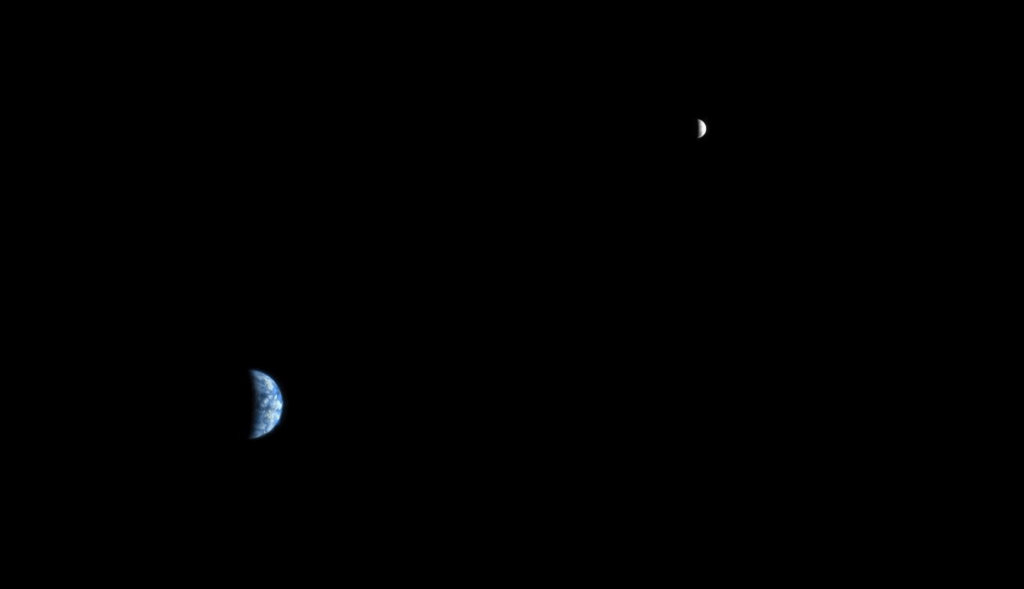
Image of Earth and its moon taken from NASA’s Mars Reconnaissance Orbiter, at a distance of 142 million kilometers.
Credit: NASA/JPL-Caltech/University of Arizona

If that’s not impressive enough, consider this: I am now officially a member of the Trillion Kilometer Club, having earned the distinction when I surpassed that distance as a traveler through space aboard the good ship Mother Earth. I took the scenic route just to rack up more frequent flier points.

You, too, are hitchhiking a little ride through the galaxy, without a guide, I might add.1 But enough about you; it’s my birthday and what I want to delve into is the relationship between time and space and how time flies, except to a common housefly, who doesn’t see time fly by, though the fly can certainly fly.

If you are not thoroughly confused yet, I suggest you continue reading and I’ll do my best to get you there.


Acting my age

YES, I’VE BEEN ALIVE A LONG time. I am now older than the Pope. I didn’t see that one coming. Nor did I ever expect the Pope to be a guy from Chicago named Bob, but I digress. If I really want to feel like I have been occupying Earth for a very long stay, though, I look to the average housefly.

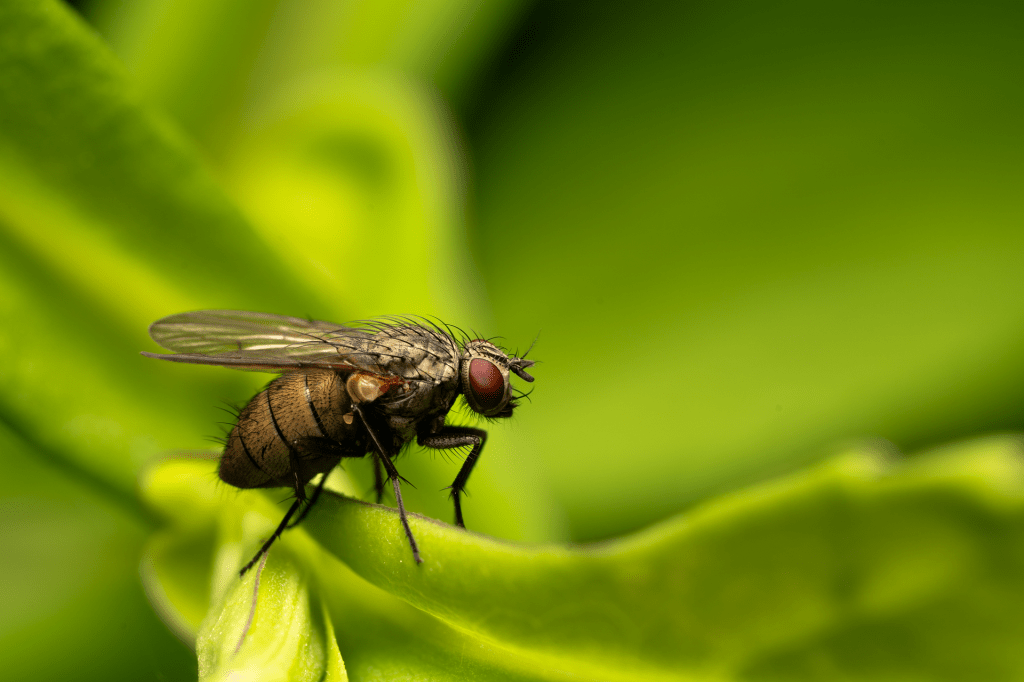
Image by William Riccio 

I’ve been thinking about these unwanted creatures as of late because we are residing in a cozy flat in London, where the weather has been uncharacteristically warm and this being Europe, our only source of ventilation is open windows, which have no screens. This provides our friends musca domestica easy access to our abode. Despite being informed that they are very much not welcomed here, they continue to come and go as they please. Maybe they don’t understand “shoo!” in my American accent.

The only redeeming quality of these winged nuisances is that they live but a few short weeks. So I can gloat that I have outlasted any member of this insect family by a factor of 1,100 to one.2 Compared to them, I have been in existence for eons. But, as the saying goes, there’s always two sides to the story.


A different point of view

FROM THE FLY’S PERSPECTIVE, my way of viewing the time-space continuum is obviously lacking.

That’s because this little insect has vastly superior optic sensors, compared to a human’s.

A human’s eyes scan at the rate of about 60 hertz, which means that in one second we are seeing 60 separate, sequential flashes of light as it reflects off objects into our field of vision. But a fly scrutinizes its surroundings at a refresh rate of between 250 to 400 times per second.

The higher scanning rate means that to the fly, paradoxically, time moves more slowly than it does to humans.

This is why it’s so darn difficult to nail one of these guys. When you extend your arm with a swatter in hand and swing at that unwanted visitor perched on the window sill, you see your action as a blur of motion. With your wrist and your elbow acting as a compound fulcrum, the flat surface of the fly swatter is being leveraged to move at almost 100 kilometers per hour. But to that little speck of an organism, you are reenacting a slo-mo replay of a batter striking out at the World Series. You think you almost had the bugger, but it is actually observing you approaching at a snail’s pace and, biding its sweet time, the critter nonchalantly performs an acrobatic airlift-evacuation out of the strike zone.

Image by Keith Johnston 

While the speed of the world appears to be dragging to that miniature entity in an exoskeleton, its brain is actually operating at a very rapid rate. Compared to a human, the information gleaned from the fly’s vision is analyzed nearly instantaneously. Part of that is bio-mechanics. The neurons have a shorter distance to travel,3 allowing the information from its eyes to reach the processing unit, aka the brain, more quickly. So the entire cycle — information input, computing, then firing of neurons — triggers a near-instant reflex.


A minute in the life of a human brain

THE FLY HAS ANOTHER ADVANTAGE. Its minuscule brain (a millionth the size of a human’s) is unencumbered by all the cross-channel talk, the ambient noise that is rattling around and interfering with the signal of electrical impulses that are pulsating through the frontal, parietal, temporal and occipital lobes inside our skulls. We are thinking about the past, the present and the future, usually all at once and muddled with emotions — regret, ambition, anxiety, anger, surprise, sadness, love, grief, and fear among others– when we should be trying to focus on being in the moment.

Image by wal_172619 


For example, imagine you are stuck in stop-and-go traffic while on a conference call because last quarter’s numbers were down and now your boss is rambling on about another reorg and of course replacing everybody with AI and you are wondering why you are even trying to keep your job maybe now is the time to open that studio in the Andes where you can teach dance to little Peruvian children — did you just think “children?” Oh geez you are late picking up your own kid you know something’s going on with them they are at that age but this could be something else should you send them to a doctor and if so what kind of doctor and — look out! That guy is obviously texting. Idiot. Jesus! — You mean the guy is an idiot, not Jesus — Doctors what about them did you or did you not already pay that $1,250 deductible to the hospital can’t believe it for just an outpatient procedure to remove a tiny benign mole what good is health insurance anyway premiums always going up better keep the job though just for the insurance — The Andes some little Peruvian village like that one in the David Attenborough special he is such a treasure you just want to be anywhere other than in this traffic do you even remember a plié from a pirouette? — Look out for that guy in the Camaro weaving in and out like he’s going to win some race — we’re all stuck in this traffic buddy — he thinks he’s special everybody thinks they’re special — Oh, what to do about dinner are you really going to see family for Thanksgiving you know how that will end whose turn is it to cook tonight should you pick something up you just missed the exit for Whole Foods well you have to get off in two exits to pick up the kid, did you forget, again? — You are a good person and a good parent, aren’t you? Of course you are. Yes, you are, at least you try that’s what’s important. Did your very best friend really say at lunch you should maybe switch to a different therapist what a thing to say, weird — Uh oh there’s the exit maybe you can still make it nope whoa nope — wow, that was close, focus, focus — yeah everybody quit your honking gotta get out, just let me get off yeah I get it you’re pissed OK got it. Jesus. People. What is with them. Your back hurts who designs these car seats they’re made for chimpanzees not humans.

Indeed, the fly has none of that stuff going on in its noggin so the little guy can just relax and when necessary react, all by reflex. Lickety-split.


Time is qualitatively relative, according to Einstein, sort of

THE FLY’S LIFE IS ABOUT QUALITY, not quantity. In just 28 days, this tiny being goes through four stages from egg, to larva, to pupa and then adult.

Day twenty-eight is the culmination of a fulfilling life. By the end they are wistfully reminiscing about the crazy things they did as pupae and how did they even make it to adulthood? Seems so long ago, now. And it would seem long ago to you, too, if you viewed the entire world at the pace of a Powerpoint™ presentation. Dear God, next slide, PLEASE.

This perspective is a nice twist on Einstein’s Theory of Relativity. The relativity part is just that: Time is relative to the observer, based on the observer’s motion through space.

Einstein’s explained his most famous theory with a description of a bolt of lightning striking a train and how it might appear at different times to two people based on their positions and movement.
Photo by Doris Ulmann. Creative Commons license.

Fun fact: Flies love life. Sure, they have some work to do propagating their species, laying or fertilizing eggs, and of course watching out for predators, but other than they are thoroughly enjoying themselves. That’s why they are always buzzing with excitement and I have the empirical evidence to prove my assertion.

Now, at this point, you may be questioning my authoritative proclamations in the field of etymology or entomology, whichever of those has to do with insects. True, I’m no scientist, but my cousin was and so I think I’m qualified in today’s government to run pretty much anything from NASA to the NIH. But I digress.

Anyway, the reason flies buzz with excitement is very simple: Everything smells and tastes great!4 And, of course, I mean EVERYTHING.

So what’s not to like when you’re a fly? We are repulsed at the thought of some lowly bug having such an unrefined palate, but that’s just how we humans are, always looking at the world as though it revolves around us, despite being schooled by Copernicus hundreds of years ago to the contrary. We wallow in denial while the fly is just eating up life. And then it dies. But what a life, right? That’s what all that buzzing is about.


We are evolution’s latecomers

SHORT THE FLY’S LIFE APPEARS TO US, but that is just another human judgment. As I think about it now, I’m being very egocentric in just comparing my individual life to be worth more than one thousand generations of these insects.

That’s because members of musca domestica have been gracing the earth for 65 million years. Homo sapiens entered the picture just 300,000 years ago. Compared to flies, we are maybe in the larval stage of evolution.

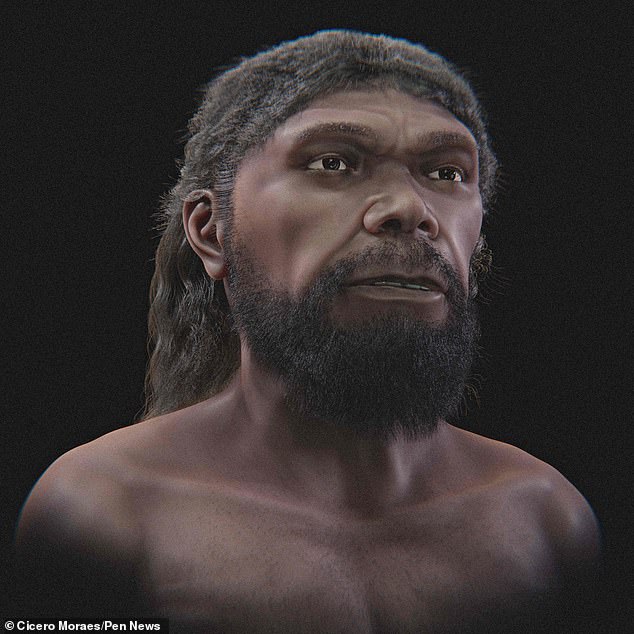
Artist Cicero Moraes created an image of the first homo sapien based on a skull believed to be 300,000 years old

Flies, as I mentioned, are not burdened with all the crazy thoughts going through our brains. But if they could think, they would undoubtedly wonder why it is that after being on this planet for so long without a care in the world they were invaded by this ugly bipedal beast that seems compelled to continually thrust one of its giant limbs at them in very slow motion. And, undoubtedly, they would find that very annoying and maybe decide to put together some type of eradication program. What to use? Hepatitis, typhoid, cholera might come to their diminutive minds.


Let’s do some fun math (yes, that is a thing)

OUR WAY OF MEASURING TIME is at once arbitrary, parochial and one-dimensional.

We are gauging our existence based on our travels aboard one watery orb as it completes one ellipse around an incandescent fireball. We mark that complete orbit as a unit of time we call a year.

We are traveling in multiple cosmic planes all at once.

But we are actually advancing in four distinct directions across the x,y, and z axes (height, width and depth) all at once. First, we are zipping around as the earth itself rotates. While we move in that circular motion, we are also orbiting the sun. Meanwhile, the sun itself is completing its own 240-million-year spin around our galactic neighborhood we call the Milky Way, and it’s dragging the entire solar system along for the ride. And finally, the Milky Way is spiraling around a black hole. So we are moving in multiple directions simultaneously. Makes me dizzy just thinking about it, never mind doing it. If you really want to be a daredevil, you can add a fifth cosmic plane just by, well, jumping out of an airplane.5

So here’s how a 70-year-old human achieves the Trillion Kilometer Club:6

  • Earth’s rotation for 365 days X 70 years = 1.025 billion Km
  • Earth’s orbit around the sun X 70 years = 65.8 billion Km
  • Sun’s orbit around the Milky Way = 441.8 billion Km
  • Milky Way’s spiral around a black hole = 866.9 billion Km
  • Grand total = 1.376 trillion kilometers

That’s why measuring time based on just the one dimension of Earth’s orbit around the sun is pretty silly if you ask me.

And here’s a fun thought: As you will notice from the numbers above, we’re going faster in each of those cosmic planes until we get to the Milky Way, which is spinning at .07% of the speed of light. As we approach the speed of light, time decelerates. This phenomenon neatly parallels the fly’s paradox, in which its vision –viewing the world at a higher scanning rate — creates an impression of time slowing down.

The sun, by the way, is just one of about 400 billion stars in our galaxy and our little heat pump is in a rather remote location at that. There may be 2 trillion or so galaxies in the universe. So 2 trillion times 400 billion is … well, let’s just say it’s a pretty big number.7 All that inter-spinning and gravitational pull and there are black holes creating a warp in the space-time fabric and now scientists think time can go backwards. So what does a “year” really have to do with anything?

Our measurement of time is subjective, but it gives us humans comfort, a sense of relevance. Some folks, as they reach my age, like to console themselves by saying “70 is the new 60.” But I prefer another aphorism: “You’re only as old as you feel.” And I feel old. I’ve got the typical aches and pains to prove it.

But I’m not that old when compared to the universe, which in a blaze of light blasted into reality some 13.8 billion years ago. My time on Earth is only .0000000005 percent of the existence of our universe,8 which means I have been around for only a very, very, very small fraction of all that has happened.

From that perspective, I feel like someone who arrives at some shindig a little late and then blurts out: “What did I miss? Let’s get this party started!”


FOOTNOTES:

  1. A Hitchhiker’s Guide to the Galaxy is a novel by Douglas Adams. ↩︎
  2. Approximation. If the average fly lives three weeks, then the math would be (52/3) X 70 = 1,213. If we use 4 weeks, then the math is (52/4) X 70 = 910. So I’m splitting the difference at 1,100. ↩︎
  3. Neurons, which move through nerves, are actually slow travelers when compared to electrons zipping through a copper wire. ↩︎
  4. Flies do not possess an olfactory organ or taste buds, of course. They use tiny sensilla, or hairs, that cover their body to do the equivalent of smelling and use tiny organs on their feet for tasting. ↩︎
  5. Technically, just moving in any direction will provide you with the Fifth Cosmic Plane, which sounds like a recently discovered bootleg album by Pink Floyd from the 1970s. ↩︎
  6. The details on those calculations were computed using perplexity.ai and are as follows:
    1. Earth’s Rotation
    At the equator, Earth spins at 1,670 km/h. Over 70 years:
    Distance = Speed × Time
    = 1,670 km/h × 24 hours/day × 365.25 days/year × 70 years
    1.025 billion km.
    2. Earth’s Orbit Around the Sun
    Earth travels 940 million km/year in its orbit:
    Total distance = 940,000,000 km/year × 70 years
    65.8 billion km.
    3. Sun’s Motion Through the Milky Way
    The Sun moves at 720,000 km/h relative to the galaxy:
    Total distance = 720,000 km/h × 24 hours/day × 365.25 days/year × 70 years
    441.8 billion km.
    4. Milky Way’s Galactic Rotation
    The Milky Way rotates once every ~240 million years, and the Sun orbits the galactic center at ~720,000 km/h. Using the galaxy’s diameter (100,000 light-years ≈ 9.461×10¹⁷ km) and its rotation fraction over 70 years:
    Circumference = π × diameter ≈ 2.973×10¹⁸ km
    Distance traveled = Circumference × (70 / 240,000,000)
    866.9 billion km.
    Total Distance Traveled
    Summing all components:
    1.025B km (rotation) + 65.8B km (orbit) + 441.8B km (Sun’s motion) + 866.9B km (galactic rotation)
    ≈1.375 trillion km (1.375×10¹² km). ↩︎
  7. That would equal 80 quintillion stars. This is estimated to be 10 times the number of grains of sand on Earth. ↩︎
  8. If my math is correct. ↩︎