Featured

70 laps around the sun

A reflection on my race through space and time

TODAY, I ACCOMPLISHED AN AMAZING FEAT without even trying. I completed 70 repetitions on the Solar Elliptical Circuit. Yeah, just finished. Going to take a well-deserved nap and then start on 71.
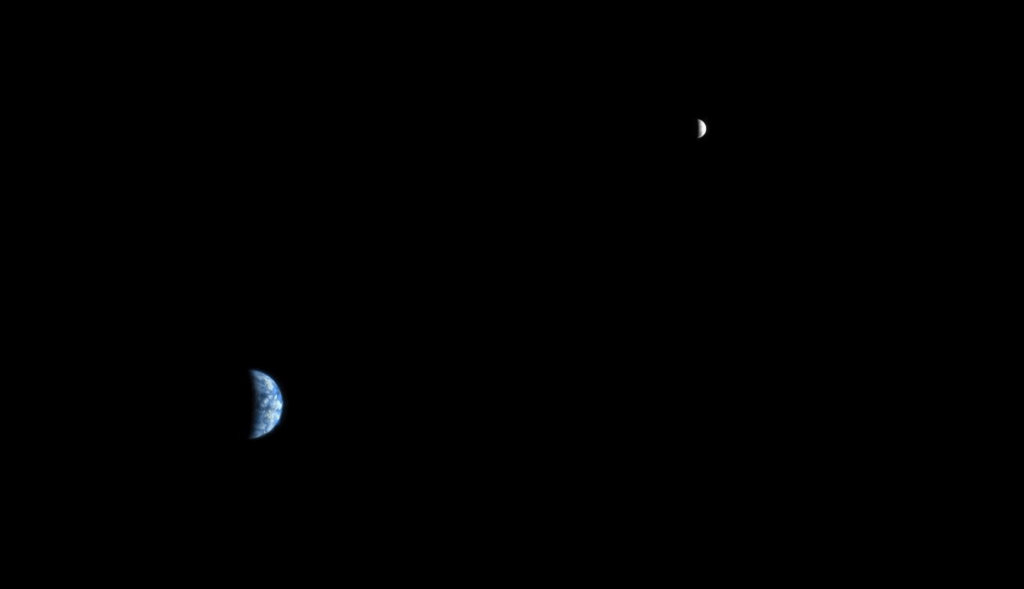
Image of Earth and its moon taken from NASA’s Mars Reconnaissance Orbiter, at a distance of 142 million kilometers.
Credit: NASA/JPL-Caltech/University of Arizona

If that’s not impressive enough, consider this: I am now officially a member of the Trillion Kilometer Club, having earned the distinction when I surpassed that distance as a traveler through space aboard the good ship Mother Earth. I took the scenic route just to rack up more frequent flier points.

You, too, are hitchhiking a little ride through the galaxy, without a guide, I might add.1 But enough about you; it’s my birthday and what I want to delve into is the relationship between time and space and how time flies, except to a common housefly, who doesn’t see time fly by, though the fly can certainly fly.

If you are not thoroughly confused yet, I suggest you continue reading and I’ll do my best to get you there.


Acting my age

YES, I’VE BEEN ALIVE A LONG time. I am now older than the Pope. I didn’t see that one coming. Nor did I ever expect the Pope to be a guy from Chicago named Bob, but I digress. If I really want to feel like I have been occupying Earth for a very long stay, though, I look to the average housefly.

Image by William Riccio 

I’ve been thinking about these unwanted creatures as of late because we are residing in a cozy flat in London, where the weather has been uncharacteristically warm and this being Europe, our only source of ventilation is open windows, which have no screens. This provides our friends musca domestica easy access to our abode. Despite being informed that they are very much not welcomed here, they continue to come and go as they please. Maybe they don’t understand “shoo!” in my American accent.

The only redeeming quality of these winged nuisances is that they live but a few short weeks. So I can gloat that I have outlasted any member of this insect family by a factor of 1,100 to one.2 Compared to them, I have been in existence for eons. But, as the saying goes, there’s always two sides to the story.


A different point of view

FROM THE FLY’S PERSPECTIVE, my way of viewing the time-space continuum is obviously lacking.

That’s because this little insect has vastly superior optic sensors, compared to a human’s.

A human’s eyes scan at the rate of about 60 hertz, which means that in one second we are seeing 60 separate, sequential flashes of light as it reflects off objects into our field of vision. But a fly scrutinizes its surroundings at a refresh rate of between 250 to 400 times per second.

The higher scanning rate means that to the fly, paradoxically, time moves more slowly than it does to humans.

This is why it’s so darn difficult to nail one of these guys. When you extend your arm with a swatter in hand and swing at that unwanted visitor perched on the window sill, you see your action as a blur of motion. With your wrist and your elbow acting as a compound fulcrum, the flat surface of the fly swatter is being leveraged to move at almost 100 kilometers per hour. But to that little speck of an organism, you are reenacting a slo-mo replay of a batter striking out at the World Series. You think you almost had the bugger, but it is actually observing you approaching at a snail’s pace and, biding its sweet time, the critter nonchalantly performs an acrobatic airlift-evacuation out of the strike zone.

Image by Keith Johnston 

While the speed of the world appears to be dragging to that miniature entity in an exoskeleton, its brain is actually operating at a very rapid rate. Compared to a human, the information gleaned from the fly’s vision is analyzed nearly instantaneously. Part of that is bio-mechanics. The neurons have a shorter distance to travel,3 allowing the information from its eyes to reach the processing unit, aka the brain, more quickly. So the entire cycle — information input, computing, then firing of neurons — triggers a near-instant reflex.


A minute in the life of a human brain

THE FLY HAS ANOTHER ADVANTAGE. Its minuscule brain (a millionth the size of a human’s) is unencumbered by all the cross-channel talk, the ambient noise that is rattling around and interfering with the signal of electrical impulses that are pulsating through the frontal, parietal, temporal and occipital lobes inside our skulls. We are thinking about the past, the present and the future, usually all at once and muddled with emotions — regret, ambition, anxiety, anger, surprise, sadness, love, grief, and fear among others– when we should be trying to focus on being in the moment.

Image by wal_172619 


For example, imagine you are stuck in stop-and-go traffic while on a conference call because last quarter’s numbers were down and now your boss is rambling on about another reorg and of course replacing everybody with AI and you are wondering why you are even trying to keep your job maybe now is the time to open that studio in the Andes where you can teach dance to little Peruvian children — did you just think “children?” Oh geez you are late picking up your own kid you know something’s going on with them they are at that age but this could be something else should you send them to a doctor and if so what kind of doctor and — look out! That guy is obviously texting. Idiot. Jesus! — You mean the guy is an idiot, not Jesus — Doctors what about them did you or did you not already pay that $1,250 deductible to the hospital can’t believe it for just an outpatient procedure to remove a tiny benign mole what good is health insurance anyway premiums always going up better keep the job though just for the insurance — The Andes some little Peruvian village like that one in the David Attenborough special he is such a treasure you just want to be anywhere other than in this traffic do you even remember a plié from a pirouette? — Look out for that guy in the Camaro weaving in and out like he’s going to win some race — we’re all stuck in this traffic buddy — he thinks he’s special everybody thinks they’re special — Oh, what to do about dinner are you really going to see family for Thanksgiving you know how that will end whose turn is it to cook tonight should you pick something up you just missed the exit for Whole Foods well you have to get off in two exits to pick up the kid, did you forget, again? — You are a good person and a good parent, aren’t you? Of course you are. Yes, you are, at least you try that’s what’s important. Did your very best friend really say at lunch you should maybe switch to a different therapist what a thing to say, weird — Uh oh there’s the exit maybe you can still make it nope whoa nope — wow, that was close, focus, focus — yeah everybody quit your honking gotta get out, just let me get off yeah I get it you’re pissed OK got it. Jesus. People. What is with them. Your back hurts who designs these car seats they’re made for chimpanzees not humans.

Indeed, the fly has none of that stuff going on in its noggin so the little guy can just relax and when necessary react, all by reflex. Lickety-split.


Time is qualitatively relative, according to Einstein, sort of

THE FLY’S LIFE IS ABOUT QUALITY, not quantity. In just 28 days, this tiny being goes through four stages from egg, to larva, to pupa and then adult.

Day twenty-eight is the culmination of a fulfilling life. By the end they are wistfully reminiscing about the crazy things they did as pupae and how did they even make it to adulthood? Seems so long ago, now. And it would seem long ago to you, too, if you viewed the entire world at the pace of a Powerpoint™ presentation. Dear God, next slide, PLEASE.

This perspective is a nice twist on Einstein’s Theory of Relativity. The relativity part is just that: Time is relative to the observer, based on the observer’s motion through space.

Einstein’s explained his most famous theory with a description of a bolt of lightning striking a train and how it might appear at different times to two people based on their positions and movement.
Photo by Doris Ulmann. Creative Commons license.

Fun fact: Flies love life. Sure, they have some work to do propagating their species, laying or fertilizing eggs, and of course watching out for predators, but other than they are thoroughly enjoying themselves. That’s why they are always buzzing with excitement and I have the empirical evidence to prove my assertion.

Now, at this point, you may be questioning my authoritative proclamations in the field of etymology or entomology, whichever of those has to do with insects. True, I’m no scientist, but my cousin was and so I think I’m qualified in today’s government to run pretty much anything from NASA to the NIH. But I digress.

Anyway, the reason flies buzz with excitement is very simple: Everything smells and tastes great!4 And, of course, I mean EVERYTHING.

So what’s not to like when you’re a fly? We are repulsed at the thought of some lowly bug having such an unrefined palate, but that’s just how we humans are, always looking at the world as though it revolves around us, despite being schooled by Copernicus hundreds of years ago to the contrary. We wallow in denial while the fly is just eating up life. And then it dies. But what a life, right? That’s what all that buzzing is about.


We are evolution’s latecomers

SHORT THE FLY’S LIFE APPEARS TO US, but that is just another human judgment. As I think about it now, I’m being very egocentric in just comparing my individual life to be worth more than one thousand generations of these insects.

That’s because members of musca domestica have been gracing the earth for 65 million years. Homo sapiens entered the picture just 300,000 years ago. Compared to flies, we are maybe in the larval stage of evolution.
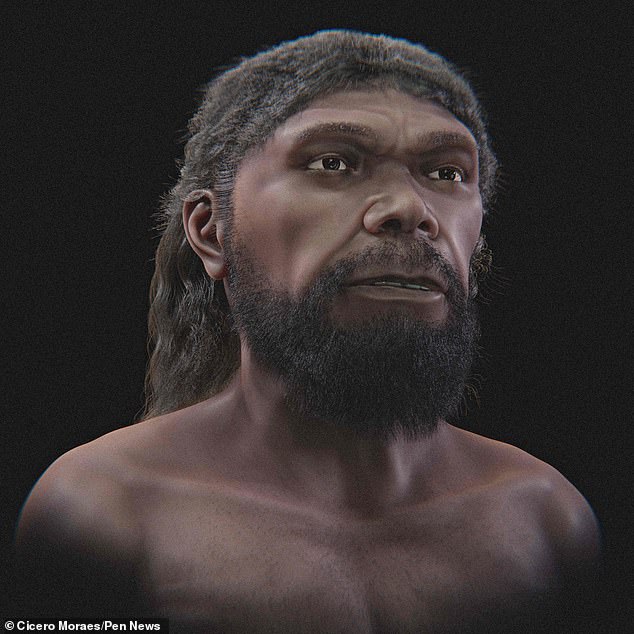
Artist Cicero Moraes created an image of the first homo sapien based on a skull believed to be 300,000 years old

Flies, as I mentioned, are not burdened with all the crazy thoughts going through our brains. But if they could think, they would undoubtedly wonder why it is that after being on this planet for so long without a care in the world they were invaded by this ugly bipedal beast that seems compelled to continually thrust one of its giant limbs at them in very slow motion. And, undoubtedly, they would find that very annoying and maybe decide to put together some type of eradication program. What to use? Hepatitis, typhoid, cholera might come to their diminutive minds.


Let’s do some fun math (yes, that is a thing)

OUR WAY OF MEASURING TIME is at once arbitrary, parochial and one-dimensional.

We are gauging our existence based on our travels aboard one watery orb as it completes one ellipse around an incandescent fireball. We mark that complete orbit as a unit of time we call a year.

We are traveling in multiple cosmic planes all at once.

But we are actually advancing in four distinct directions across the x,y, and z axes (height, width and depth) all at once. First, we are zipping around as the earth itself rotates. While we move in that circular motion, we are also orbiting the sun. Meanwhile, the sun itself is completing its own 240-million-year spin around our galactic neighborhood we call the Milky Way, and it’s dragging the entire solar system along for the ride. And finally, the Milky Way is spiraling around a black hole. So we are moving in multiple directions simultaneously. Makes me dizzy just thinking about it, never mind doing it. If you really want to be a daredevil, you can add a fifth cosmic plane just by, well, jumping out of an airplane.5

So here’s how a 70-year-old human achieves the Trillion Kilometer Club:6

  • Earth’s rotation for 365 days X 70 years = 1.025 billion Km
  • Earth’s orbit around the sun X 70 years = 65.8 billion Km
  • Sun’s orbit around the Milky Way = 441.8 billion Km
  • Milky Way’s spiral around a black hole = 866.9 billion Km
  • Grand total = 1.376 trillion kilometers

That’s why measuring time based on just the one dimension of Earth’s orbit around the sun is pretty silly if you ask me.

And here’s a fun thought: As you will notice from the numbers above, we’re going faster in each of those cosmic planes until we get to the Milky Way, which is spinning at .07% of the speed of light. As we approach the speed of light, time decelerates. This phenomenon neatly parallels the fly’s paradox, in which its vision –viewing the world at a higher scanning rate — creates an impression of time slowing down.

The sun, by the way, is just one of about 400 billion stars in our galaxy and our little heat pump is in a rather remote location at that. There may be 2 trillion or so galaxies in the universe. So 2 trillion times 400 billion is … well, let’s just say it’s a pretty big number.7 All that inter-spinning and gravitational pull and there are black holes creating a warp in the space-time fabric and now scientists think time can go backwards. So what does a “year” really have to do with anything?

Our measurement of time is subjective, but it gives us humans comfort, a sense of relevance. Some folks, as they reach my age, like to console themselves by saying “70 is the new 60.” But I prefer another aphorism: “You’re only as old as you feel.” And I feel old. I’ve got the typical aches and pains to prove it.

But I’m not that old when compared to the universe, which in a blaze of light blasted into reality some 13.8 billion years ago. My time on Earth is only .0000000005 percent of the existence of our universe,8 which means I have been around for only a very, very, very small fraction of all that has happened.

From that perspective, I feel like someone who arrives at some shindig a little late and then blurts out: “What did I miss? Let’s get this party started!”


FOOTNOTES:

  1. A Hitchhiker’s Guide to the Galaxy is a novel by Douglas Adams. ↩︎
  2. Approximation. If the average fly lives three weeks, then the math would be (52/3) X 70 = 1,213. If we use 4 weeks, then the math is (52/4) X 70 = 910. So I’m splitting the difference at 1,100. ↩︎
  3. Neurons, which move through nerves, are actually slow travelers when compared to electrons zipping through a copper wire. ↩︎
  4. Flies do not possess an olfactory organ or taste buds, of course. They use tiny sensilla, or hairs, that cover their body to do the equivalent of smelling and use tiny organs on their feet for tasting. ↩︎
  5. Technically, just moving in any direction will provide you with the Fifth Cosmic Plane, which sounds like a recently discovered bootleg album by Pink Floyd from the 1970s. ↩︎
  6. The details on those calculations were computed using perplexity.ai and are as follows:
    1. Earth’s Rotation
    At the equator, Earth spins at 1,670 km/h. Over 70 years:
    Distance = Speed × Time
    = 1,670 km/h × 24 hours/day × 365.25 days/year × 70 years
    1.025 billion km.
    2. Earth’s Orbit Around the Sun
    Earth travels 940 million km/year in its orbit:
    Total distance = 940,000,000 km/year × 70 years
    65.8 billion km.
    3. Sun’s Motion Through the Milky Way
    The Sun moves at 720,000 km/h relative to the galaxy:
    Total distance = 720,000 km/h × 24 hours/day × 365.25 days/year × 70 years
    441.8 billion km.
    4. Milky Way’s Galactic Rotation
    The Milky Way rotates once every ~240 million years, and the Sun orbits the galactic center at ~720,000 km/h. Using the galaxy’s diameter (100,000 light-years ≈ 9.461×10¹⁷ km) and its rotation fraction over 70 years:
    Circumference = π × diameter ≈ 2.973×10¹⁸ km
    Distance traveled = Circumference × (70 / 240,000,000)
    866.9 billion km.
    Total Distance Traveled
    Summing all components:
    1.025B km (rotation) + 65.8B km (orbit) + 441.8B km (Sun’s motion) + 866.9B km (galactic rotation)
    ≈1.375 trillion km (1.375×10¹² km). ↩︎
  7. That would equal 80 quintillion stars. This is estimated to be 10 times the number of grains of sand on Earth. ↩︎
  8. If my math is correct. ↩︎

Featured

The Boy Genius who forgot the Golden Rule of Business

The Tesla brand is in meltdown and the moral of the story is worthy of an Aesop fable

LET ME TELL YOU A TALE and it’s a good one. It’s about a Boy Genius who came to a place known as the Land of Opportunity and thanks to his privileged heritage he rose quickly to a prominent position and was then able to convince the Smart People of the Land of Opportunity that he was going to create a new kind of car that could help humanity and at no extra charge save the entire world. He built the car and he sold many of them, because the Smart People really, really believed in his vision and the cars were pretty sporty.

The Tesla brand is in meltdown mode,
thanks to Elon Musk’s inability to understand
the Golden Rule of Business: Know Thy Customer.

He had the Midas touch.

He then erected and launched rockets and said, “Saving Earth is cool and all but why not invade some other planets? That would be cooler.” And the Smart People thought, “Well, he did build that car. And now these rockets. He is superhuman. We should listen to him some more.” And they did. And he became the richest Boy Genius in the world.

And then things got weird, or rather the Boy Genius got weird. Very weird. He became addicted to his power, fame and fortune and many, many pharmaceuticals. And then he not only joined but became a leading proponent of the Vile Movement.

The Vile Movement was everything the Smart People did not like. This made it clear to the Smart People that the Boy Genius didn’t mean any of that stuff about saving the world or helping anybody but himself. All he was doing was using the money that he got from the Smart People to finance causes that would destroy everything they believed in.

And that’s when his Midas touch backfired. That’s when he realized he could not eat his gold. You see, these Smart People became very angry. Many unloaded their cars. Some plastered bumper stickers making it clear they hated this Boy Genius despite owning the car. Protestors took to the streets. His company went into what the Boy Genius might describe as a “rapid unscheduled disassembly.” That’s a nice way of saying it imploded.

The Boy Genius earnestly and without a hint of irony asked: “Why are people so mean?” And then he announced that he would get back to making stuff, really cool stuff that nobody but he — the Boy Genius — could make. But the Smart People who bought his cars and had supported his vision didn’t believe him anymore, because the Smart People now realized he was not a genius, he was just a boy like the one who craved attention so badly he cried “wolf” too many times. The Boy Genius was just someone who could never be trusted again.

Will the Boy Genius rise from the ashes like Phoenix or better yet save his own company like Steve Jobs?1

Stay tuned for next week’s episode!

To be honest, no one knows just yet, so don’t expect a subsequent installment. But I do think I know what the moral of the story is and it is worthy of an Aesop fable.


I bought the vision with U.S. dollars

I MIGHT AS WELL ADMIT IT it right up front: I was sold the first time I rode in a Tesla. It was 2014 and a colleague of mine offered a ride to some meeting in San Francisco. As he hit the pedal, the torque threw my head into the headrest. It was exhilarating. We zipped through traffic on 101 North as he regaled me with stories about over-the-air updates. “It’s just an iPhone with wheels,” he said, as the autopilot app merged us into the left lane.

It was cool. It was unlike anything else on the road. And it was a unique approach to using renewable energy. A luxury vehicle that rode you around in style and saved the environment. What’s not to like?

At the time of this little excursion, I had spent just over 20 years in Silicon Valley. And, to be honest, I was jaded. I had seen lots of technologies come and go. The pattern was abundantly clear to me: A New Shiny Thing appeared and promised to disrupt some big bad legacy industry and in the process the New Shiny Thing would make the world a better place for all.

That was the promise of the World Wide Web, social media, business intelligence, the cloud, you name it. All we got out of it was the likes of Google, Facebook, and Amazon scraping our private data and harnessing our very personal proclivities for fun and profit.

Tesla checked all the boxes to qualify as the New Shiny Thing and then some. It wasn’t just disrupting the auto industry, it was upending the entire power grid as well by creating a new model for the production and consumption of renewable energy.

I watched with amusement as auto execs scrambled to join the EV parade and as the PG&Es and ConEds of the world struggled to adapt their monopolies to a distributed energy network that they couldn’t control.

All of that was impressive. But what really sold me was the Tesla mission statement to transition the world to renewable energy. It was based on a manifesto supposedly written by Elon Musk himself.

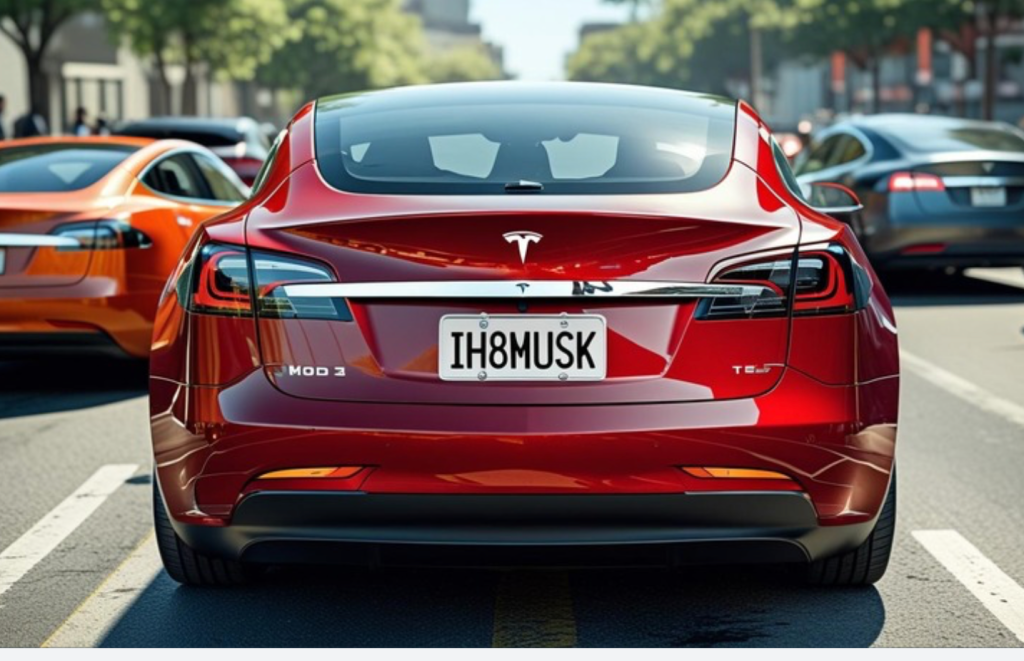
Funky AI image, but the sentiment
is real for many Tesla owners.

And so that glimmering, shimmering object, that silvery emblem with a “T” was the lure that caught my eye. And despite my experience-based cynicism, this time I bit: hook, line and sinker.

I even chuckled to myself that I had missed a golden opportunity with Musk years before.


A kid named Elon who wasn’t kidding

HE WAS JUST ANOTHER 20-something nerd, one with a prematurely receding hairline and a latent outbreak of acne, when I met him in 1996. He had called me up and asked for a meeting. At the time, I was running the Java Developer Ecosystem at Sun Microsystems. My voice mail and email were clogged with similar requests because Java, a programming language invented by James Gosling, was fortuitously just the right platform for Internet-based applications. Java was red hot. Every start-up in a garage had an idea for the next big thing using Java.

But Musk was quite persistent and so I did meet with him, and his brother — Gimbel, Gumball or something like that. It has come to light recently that the two Musk boys had overstayed their visas in the United States around this time. So, apparently, I bought breakfast for two illegal aliens and then listened to their pitch. (Please do not tell ICE.)

Elon did all the talking. His patter was fast and his Afrikaans accent was thick. All I could glean from his running monolog was that he wanted to sell his company, called Zip2. Naturally, I assumed the enterprise had something to do with replacing snail mail with email, which had already been done. But it turns out Zip2 was even more boring: It was just online classified ads. And he never once mentioned how Java fit in. So I passed on the opportunity.

But now, here he was, 18 years later in 2014, proving me wrong. He had sold Zip2 for a tidy sum, started another company that got acquired by PayPal, which then got gobbled up by eBay. He cashed out and funneled those funds into Tesla, where he financially elbowed his way into the CEO position. He turned out to be the Boy Genius after all. I wondered how I could have gotten him so wrong.

Shortly thereafter in 2015, I had the chance to meet J.B. Straubel, one of the founders of Tesla. That’s when I learned who was the technical mastermind behind much of the company’s technology and operations. It was Straubel who invented the battery cell design that was the breakthrough for electric vehicles, giving them the range of gas-powered cars.

Straubel was the guy behind new manufacturing processes, including the Gigafactory. And he created a whole new market with another idea: the PowerWall.

Bumper stickers for sale on Etsy.
The anti-Musk movement is worldwide.

So, I thought, Musk was the prancing show horse, Straubel the diligent — but brilliant — work horse. This was not an uncommon arrangement in Silicon Valley. Behind every Steve Jobs, usually there was a Steve Wozniak. This just reinforced my appreciation for what Tesla was doing.

In the following months, I wrote several positive pieces about the company in my blog and in CIO magazine. And then, starting in 2017, I went fan boy. I ended up buying the whole package: First the solar panels, then a Tesla Model 3 Long Range, then the Powerwall II. I signed up for Starlink beta as soon as it was available. I bought Tesla stock.

Today, I own none of those things. And I am just one of perhaps hundreds of thousands of formerly loyal customers who have shed all their Tesla assets in direct protest against Musk.


He never saw it coming, and still doesn’t understand why

HONESTLY, I WAS AS SURPRISED as many other FTOs — Former Tesla Owners — at how quickly the anti-Musk movement achieved its formidable momentum. That surprise was not without a tinge of schadenfreude.

But, I am reasonably sure, no one was more shocked than Musk himself. I think I know why there was such animosity from the FTOs toward Musk, and why he can’t comprehend what is happening.

What Musk — who believes that empathy is a weakness — either forgot or never learned was the Golden Rule of Business:

Know Thy Customer

I’m going to profile the Tesla buyer, of which I was one. We are mostly Baby Boomers and Gen-Xers with a decent chunk of disposable income. We are educated and liberal. We are technically savvy. We voted for Hillary even though Bernie was the better choice. We voted for Kamala even though we are inspired by AOC.

We take climate change seriously.

We advocate for equal rights for all people, regardless of ethnicity, color, sexual orientation or religious beliefs.

We make fact-based decisions. We trust science.

We started Earth Day. We lobbied worldwide for fixing the ozone and it worked. We bought into recycling, organic foods, renewable energy, hybrids. Some of us were hippies, and then yuppies. We abandoned organized religion and leaned into New Age with Buddhism and meditation. And then we became parents and then grandparents who only want a better place for our kids and grandkids.

The anti-Musk vitriol being expressed now reminds me of another story, this one from Aesop, titled “The Farmer and the Viper.”

A farmer finds a viper outside in the freezing cold and decides to be kind to the animal, so he takes it inside. After the viper warms up, the snake bites the farmer.

Moral of the story: Don’t be kind to Evil.

Tesla buyers, at the risk of stating the obvious, are the farmer in this fable. We thought we were doing the right thing helping the viper. But we learned our lesson. We have banished the viper from the house because we absolutely do not want to be kind to Evil.


Once bitten, never again

SO WHEN MUSK WENT FULL-ON MAGA and entered Washington D.C. with a chainsaw, this is the nucleus of the population that collectively lost it. This guy was supposed to be our salvation. Instead, he sold us down the road.

What made it all the more aggravating was that there was considerable merit in what Tesla the company was doing; thank you J.B. Straubel.

This was not ENRON. In fact, it was even worse than being swindled by some fraudulent accounting scheme. We expended our hard-earned dollars not as just a financial investment but as an emotional one, supporting Musk to lead the cause. It made him obscenely rich. Now, here he was funneling our dollars into the very antithesis of what we believed in.

And we still want that better place, damn it.


Time to do some soul searching

BUT WHAT IS EVEN MORE TROUBLING for many of us, and I include myself in this group, is that we were duped in the same fashion as the Conservative Cult Crowd.

For 40-plus years, we have watched in disbelief as Republicans slipped into their dystopian mind-numbing coma, starting with Ronald Reagan, then George Bush aka Dick Cheney, and culminating with the Charlatan Clown. We wondered how it was possible voters could not see what was happening right in front of them. And, I might add, right to them.

Yet, we Tesla owners smugly assumed we were too wise to get conned, all while we were being led by the nose by a scam artist of our own making.

To be very clear, all the ideas about climate change and what’s needed to save the planet are valid, scientifically proven. But we should have been listening to Greta Thunberg, not Elon Musk. We should have been investing in mass transit, in urban planning, in shutting down the fossil fuel industry and reining in the Military Industrial Complex. Yes, Tesla has some interesting technology. But the environmental mission statement — the manifesto — is gone from Tesla’s website, and all we got were several million more cars clogging our already overburdened streets and highways. All we ended up with was another disappointing New Shiny Thing failing to live up to the hype.

And here is the trap that we all fall into, regardless of our ideology, political affiliation, religious beliefs. Once we’ve invested, we tend to want to double down to justify our actions. Throw some good money after the bad in a vain attempt to regain our original investment. We live in denial that we made a mistake. This is the sunken cost fallacy.

We knew about Musk’s true character long before January 2025. But we had already bought in.

He spouted disinformation about COVID and violated laws to keep his Fremont factory running at the height of the pandemic. But we looked the other way. He displayed his racist-misogynist views on Twitter and then bought the platform and turned it into his own crowd-sourced Elon Musk adoration society. We again gave him the benefit of the doubt.


Unsafe at any speed

YET, IT WASN’T JUST THE dangerous political views that we conveniently dismissed. Even more egregiously, we forgave the “safety idiosyncrasies” of the Tesla car’s overall road worthiness.

We knew that Ralph Nader and many others had been warning U.S. regulators about the inherent design flaws in Tesla’s automated system for years. We not only chose to ignore the warnings, we drove the damn vehicles. Since 2014, the National Transportation Safety Board has tracked hundreds of accidents and 51 fatalities involving Tesla’s guidance system. I can personally relate one incident while driving our car that came close to adding my spouse and me to those statistics.

We were driving on I-5 north of Bakersfield, California on a clear day with perfect visibility. The road was straight. There was very light traffic. We were cruising along at 80 mph, using FSD (full self-driving). I was in the driver’s seat and I can attest that both my hands were on the wheel, when the system, without warning, slammed on the brakes.

The car skidded and swerved into the right lane before I regained control.

What caused this malfunction? This is known in the Tesla world as “phantom braking.” Whether there is a ghost in the machine or not, I don’t want it activating a “sudden unplanned deceleration” to a dead stop, especially when I’m moving almost 120 feet per second.

Here is my analysis of what happened:

There was nothing directly in front of us. But, about a quarter mile up the road, there were two white 18-wheelers side by side, as one overtook the other. My guess is the reflection of those two vehicles, which were just underneath a white concrete overpass, confused the Tesla cameras and software, which interpreted the three distinct white objects as one large obstruction. We were heading at high speed toward a giant wall, as far as the computer was concerned.

Even worse, the system misjudged the distance to this imaginary barrier as not a quarter-mile ahead, but directly in front of us. That is the only feasible explanation for why the car functioned the way it did.

This is a well-documented problem with Teslas. Musk insists the cars don’t need radar or LIDAR but obviously the cameras alone are not good enough as sensory input for full self-driving or any kind of assisted driving. Fortunately, there was no one behind us or in the right lane when this occurred, as has happened on the Bay Bridge and elsewhere.

That was the scariest incident, but not the only one for us. The car easily got confused whenever roads had been widened or repaved and residue from the old white lines remained faintly visible, or when there were traffic cones or other temporary modifications to the surface or surroundings. The car would swerve and brake without warning. We used FSD only a few times, and paid diligent attention whenever we had it activated. It never, ever felt safe.


Adding it all up

NOW IN RETROSPECT, as I think about it — the 180-degree change in politics, the disturbed behavior of the man both personally and professionally, the clearly dangerous condition of the cars — I feel like Homer Simpson, slapping my forehead. How could I have not seen it? I might as well have given $100,000 to that Nigerian prince. At least his emails were polite.

And here is the hardest realization to face: I can deride the MAGA crowd who believe in Jesus Christ and yet can justify voting for a convicted rapist and felon who doesn’t even know which end of the Bible is up (literally). Weren’t the other Tesla owners and I compartmentalizing our actions as well?

I didn’t think I could be that easily persuaded to look the other way. So I’m angry, not just at Musk, but at myself. And I bet the other FTOs (Former Tesla Owners) are feeling the same way.

How did this happen to a bunch of well-education, well-informed people?


The power of myth

THERE IS A SCHOOL OF THOUGHT, led by some serious thinkers such as Yuval Noah Harari and Karen Armstrong, that posits that there was one very key distinguishing characteristic that led to homo sapiens surviving and even thriving, while the Neanderthals, Denisovans and other species went extinct. It wasn’t our biology, superior tool making, or language. It was fiction: Telling ourselves stories that give meaning to things we don’t understand.

Where did we come from? Viracocha, or Brahma, or God. Take your pick.2 Why do we die? We don’t! We just go somewhere else in another form. Why was there a flood just when we were bringing in the crops? Oh, the gods must have been angry. Maybe we need to slaughter a lamb to appease them.

Myths are the easiest path for our minds to take to explain these intractable problems.

Once humans developed this line of thinking, some interesting behaviors appeared, because believing in a common set of myths can act as an organizing principle. If one person can convince the others that he or she has been designated to act as the messenger for a god or gods, it’s pretty easy to get those people to fall in line.

The Code of Hammurabi is considered one of the most important and influential ancient legal documents in the world. But the Babylonian king for which it is named did not profess to write the 282 laws himself. He was just the messenger, delivering this fiat directly from Shamash, the Babylonian god of justice.

Moses and the Ten Commandments has a similar plot.

In the Declaration of Independence, Thomas Jefferson cites that …”all men are created equal, that they are endowed by their Creator with certain unalienable Rights … ” Jefferson was just acting as the scribe for a divine being when listing those rights.

Humans conjured up religion, the concept of money and monetary systems, laws and moral codes. But by convincing ourselves these abstract notions were either handed down from on above or have some higher sense of purpose, we have a convenient way to create order out of chaos.

Oh, how we love a good story.

And this is how humans were able to organize in bands of not just 50 but 500, 5,000, even 5 million. It’s how you build pyramids (and pyramid schemes), how you wage crusades, how you get millions of people to put their hands on their hearts and tearfully pledge allegiance to a fictitious entity called a country.

You can motivate a heck of a lot of people to work in concert and accomplish some pretty crazy things just by convincing them they are parter of some bigger, mysterious force.

Neanderthals never saw us coming.


The Silicon Valley myth

SOMEWHERE ALONG THE WAY in the 1990s, when our generation elected the hip, saxophone-toting Bill Clinton to be the first Baby Boomer president, we thought that maybe, just maybe we could forge a different economic model, where capitalism meets altruism, where we could throw out all the old rules for business and society, thanks to microprocessors and software.

We sincerely believed that Silicon Valley ideas, fueled by a few million in venture capital dollars, could, like alchemy changing lead into gold, make the world a better place and if some people got rich cashing in their ISOs and NSOs3 in the process, well that was pretty cool, too.

Here’s what we really did: We created our own story. It’s the Silicon Valley Myth. Its a recipe made up of all the beliefs we already know and trust: You just add a slight twist of technology, a dash of religion, a sprig or two of Adam Smith, seasoned with Utopian philosophy. Sprinkle in some goofy company names to pretend work is fun, toss in some free meals and Pilates for good measure.

Many great things have come out of Silicon Valley. Many people got rich. But, let’s admit it, the business model is no different than the Industrial Revolution: Make things and services faster, cheaper and better.

In both eras, as technology rapidly changed the status quo, humans had trouble keeping up. Some, like the Luddites revolted. Today, maybe a similar trend is the anti-vaxxers. We get overwhelmed. We look for shortcuts to the answers.

And that’s when we elevate certain people we consider successful to that myth-like status of Moses and Hammurabi.

In the Gilded Age it was the likes of Rockefeller, Edison and Carnegie. In our times it is Steve Jobs4, Bill Gates, and yes, Elon Musk. Good story tellers all who conveniently fulfill what we ask of them: to pretend they are superhuman and have all the answers.

So when a Musk comes along and says “I’ve got the solution to climate change and it’s actually cool and fun!” we fall into the same trap as all those humans before us.

We love a good story.

So, it should be no surprise that Silicon Valley employees and residents were among the earliest of early adopters of Teslas. It was the story for all Silicon Valley stories.


Rise and shine!

BUT HERE IS WHERE I GIVE MYSELF and my fellow FTOs some credit. We woke up. Yeah, think about that: We’re WOKE. And us Woke Folk woke the fuck up. We have chased that viper out of our house and it shall be banished forever.

We took to the streets and pulled the road out from under Tesla at a very critical juncture in the company’s existence.

Tesla had already been falling behind. It’s cash cow Model 3s and Model Ys were outdated at a time when EVs were fast on their way to being commoditized. BYD can deliver a better vehicle at half the price. And they aren’t just copying, they are innovating. Meanwhile, Tesla’s newest offering, the Cybertruck, is an unmitigated flop, the 21st Century Edsel.

This is all happening just when Musk needs that Tesla revenue and profit to propel the next big plays for the survival of the company: robotics. Without that financial fuel, he is going to fall further behind investing in these highly competitive and potentially very lucrative new opportunities, at the very time he is losing the lower end of the car market.

This reminds me of another story, about the famous French wit Voltaire. On his deathbed, the prolific author was being administered the Last Rites by a Catholic priest, and the conversation went something like this:

Priest: “Do you denounce Satan?”
Voltaire: “No.”
Priest: “Why not?
Voltaire: “Now is not the time to be making enemies.”

Musk should have thought twice, even thrice, before biting the hand that carried him into a warm house, before pissing off the very customers he needed to move onto to the next big thing. It was the very wrong time to make enemies. But, of course, a viper does what is in its nature.

The only thing sustaining Tesla’s insane stock valuation now is Musk’s smoke-and-mirror show. Investors didn’t mind as long as the cash was rolling in. But the money is drying up, the smoke has dissipated and we see the man behind the curtain for who he really is. There is no path to winning back the hearts and minds of the FTOs any more than Bernie Madoff will arise from the grave and convince his old marks to invest in his latest Ponzi scheme.

I promise you this: I will never give Musk another dollar.

Musk — and Tesla — may survive, but he and the company inexorably linked with him will be forever tarnished, forever relegated to a case study in business school. It will be among the cautionary tales: Don’t do what these guys did. He will be right in there with John DeLorean of the eponymous car company, Elizabeth Holmes of Theranos, Inc., Kenneth Lay of Enron, and Adam Neumann from WeWork.

And to me, being in that company is the best place for Musk.

Unless he wants to go to Mars. I’ll break my promise and pay to send him to Mars.


FOOTNOTES

  1. Having met both Elon Musk and Steve Jobs, I can say with certainty he will never be Steve Jobs. Jobs asked questions. He was a diligent listener. Musk is in love with his own voice and ideas. ↩︎
  2. Virtually every organized religion in every culture has a remarkably similar story of the creation of humans. ↩︎
  3. ISOs: Incentive Stock Options, NSOs: Non-qualified stock options. These are “options” to buy a stock at a particular price, sometimes zero and then sell them at at market rate, almost always at a very healthy profit. Stock options drive much of the employee pay packages in Silicon Valley. ↩︎
  4. Steve Jobs died in 2011, but he is still among the top quoted and studied business gurus . ↩︎

Walls, bridges, and baboons

Featured
The wind-swept sand dunes of the Colorado Desert in California.

We may think we’re Great, but, alas, we’re still Apes

ON A DRIVE FROM Yuma, Arizona to San Diego, California, I was captivated by the ever-changing, surreal topography. But two human-made structures punctuated the natural landscape in a way that got me to thinking about how much our species has in common with baboons.

Yes, baboons. But first, a bit about the scenery.

Sherry imitates a towering saguaro cactus
in the Arizona desert.

On Interstate 8, it seems the moment you traverse the border at the Colorado River, the saguaro cacti disappear. It’s as though these succulents, with their iconic outstretched arms reaching for the sky, are a proprietary brand of the Copper State.

Not to be outdone, the Golden State immediately presents you with the quintessential sand dunes of the Colorado Desert, sculpted by the wind into smooth giant hills, resembling mounds of poured sugar. Except for the occasional Joshua tree, yucca plant, or creosote bush struggling to survive, the dreamy-yet-desolate terrain seems right out of Lawrence of Arabia. You might expect to see the titular character bouncing astride a loping camel, kicking sand in the air with its hooves. The distant silhouette of the Chocolate Mountains adds to the backdrop, as though painted on a movie-set canvas.

It is just past the dunes that I-8 veers directly south and then hugs the international border with Mexico. It is here that you will be introduced to The Wall.


Structure No. 1: The Wall

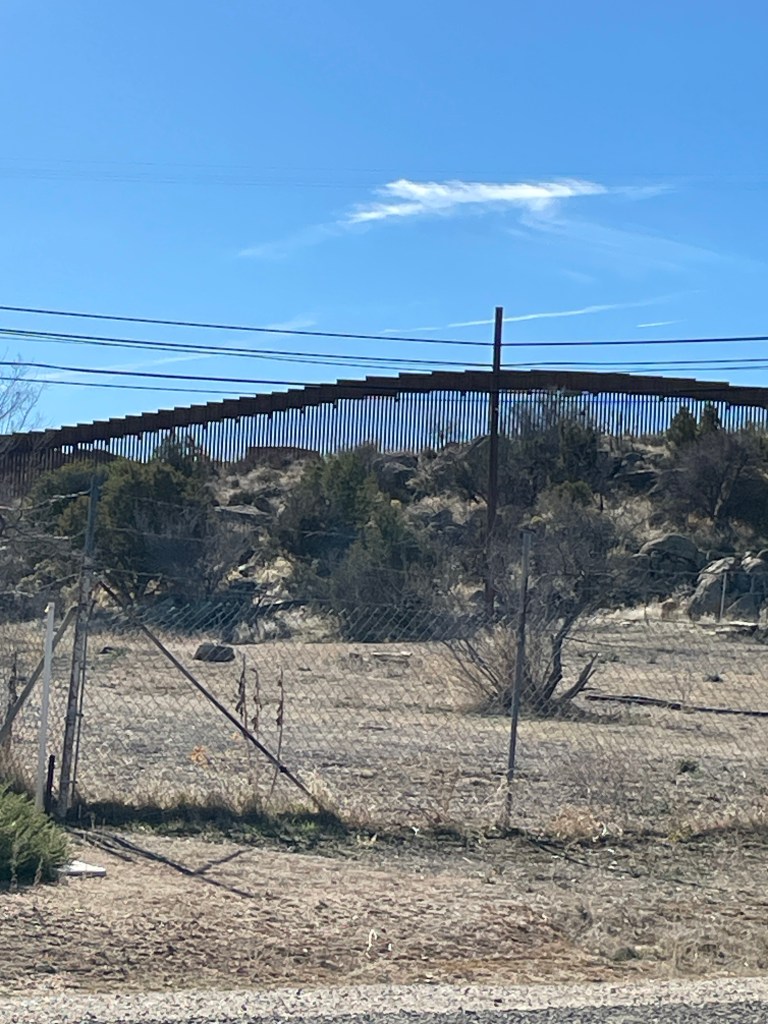
DEVOID OF EVEN A SEMBLANCE OF AESTHETICS, the giant black fence of solid steel thrusts discordantly out of the terrain. To put it in today’s lingo: the wall is photobombing the vast, arid landscape. The Wall serves its utilitarian purpose, but with mixed results, as has been true of such barricades for millennia. Its xenophobic ancestry can be traced to the Great Wall of China, Hadrian’s Wall, and in more modern times, the Berlin Wall.

Ineffective though it may be, The Wall’s brutalist design sends an unambiguous political message: KEEP OUT.

The Wall separates the town of Jacumba Hot Springs from its sister pueblo of Jacumé, Mexico.

Continuing west on I-8, the next section of The Wall you will spot is in the diminutive town of Jacumba Hot Springs. This hamlet of 800 or so souls has the privilege of sporting one of the first incarnations of this ugly fortification, erected during the Clinton administration.

I’m not sure who had the bright idea to construct this monstrosity with steel plates left over from the Vietnam War. Maybe some political consultant thought this could be spun as a “swords to plowshares” narrative.

But the irony is just too delectable to ignore. After using this material to violently (and unsuccessfully) invade a far-off land, all in the name of democracy, the U.S. then recycles this war-machine detritus to “protect” itself from huddled masses yearning to be free… Give me your tired, your poor,1 but not if they are your next-door neighbors, I guess.

All of this is worthy of a treatise on its own, but I’ll have to save that for a later day.

Although the wall in Jacumba is technically on the edge of town, it’s perceived by the villagers as having cleaved their lives in two, since many residents had or still have relatives in the sister pueblo of Ejido Jacumé on the Mexican side. What was once a casual 10- or 15-minute walk can now take a half day of driving — via the nearest “official” border crossing.

There’s plenty more diverse scenery to savor on this leg of the journey, including the Anza Borrego Desert and the Jacumba Wilderness itself. Also worthy of note is Smuggler’s Gulch, named in the 1880s for the cattle rustling that occurred between the U.S. and Mexico — in which direction I’m not sure. Here, in a very narrow canyon, giant sandstone boulders, many the size of a McMansion, teeter on cliffs. These car-crushing rocks appear ready to roll any minute.


Structure No. 2: The Bridge

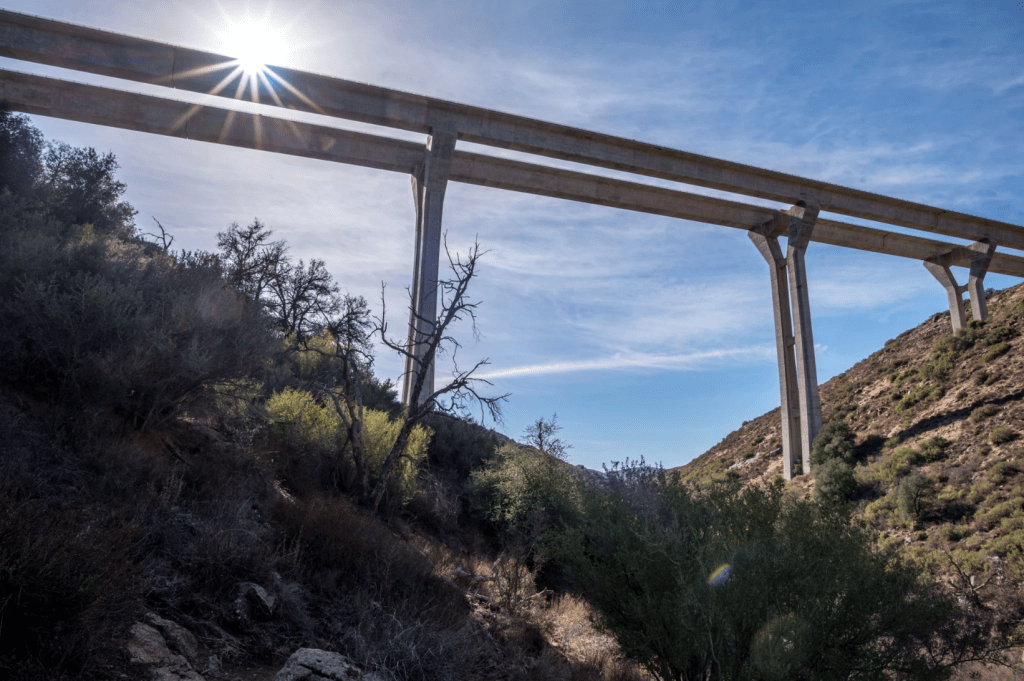
The Nello Irwin Greer Memorial Bridge, more commonly known as the Pine Valley Creek Bridge,
rises some 440 feet, or 134 meters, from the ground.
Photo by George J. Janczyn. Used with permission2.

AS YOU CONTINUE YOUR JOURNEY to San Diego, you’ll ascend once again and eventually enter the Cleveland National Forest. You will then be confronted with a deep canyon that would be impossible to traverse in any vehicular manner were it not for a unique marvel of engineering.

This is the second of the two aforementioned structures that brought baboons to mind (yes, I’m getting to that). And it is officially known as the Nello Irwin Greer Memorial Bridge, named in honor of the engineer who managed the project. But it is more commonly referred to as the Pine Valley Creek Bridge.

Now — full disclosure — I’m a bit biased when it comes to comparing walls to bridges3. The former is there to exclude one group of humans from another. The latter, on the other hand, intends to unite us.

At the time of its completion in 1974, the Stone Valley Creek Bridge was the highest concrete girder viaduct in the world. That is impressive. But for me, what is even more inspiring is how Greer and his team accomplished this feat utilizing such an elegant design.

The segmented cantilevered method used to hold the road bed aloft is a clever Y-shaped row of pillars. Moreover, the entire ensemble seems to at once blend in with its environs and enhance the scenery at the same time.

I can’t think of many “man-made” structures that can do that.

The backstory on this span across Stony Creek is a fitting juxtaposition to The Wall in Jacumba. Greer rerouted I-8 to save the town of Pine Valley, for which I’m sure its citizens are forever grateful.

The Wall cuts a town in two; The Bridge saves a town. You can see where this is all heading and that is why it is now time to cue the baboons.


EQ vs. IQ

I CAN’T SAY I HAD EVER HAD even a modicum of interest in learning about these distant primate cousins of ours until 2019. At the time, Sherry and I were hiking in the Table Mountain National Park at the Cape of Good Hope, South Africa.

Although the Cape feels like the edge of the world, this walk did not seem particularly remote. There’s plenty of fellow tourists and the trail is clearly marked. There is even a restaurant at the summit.

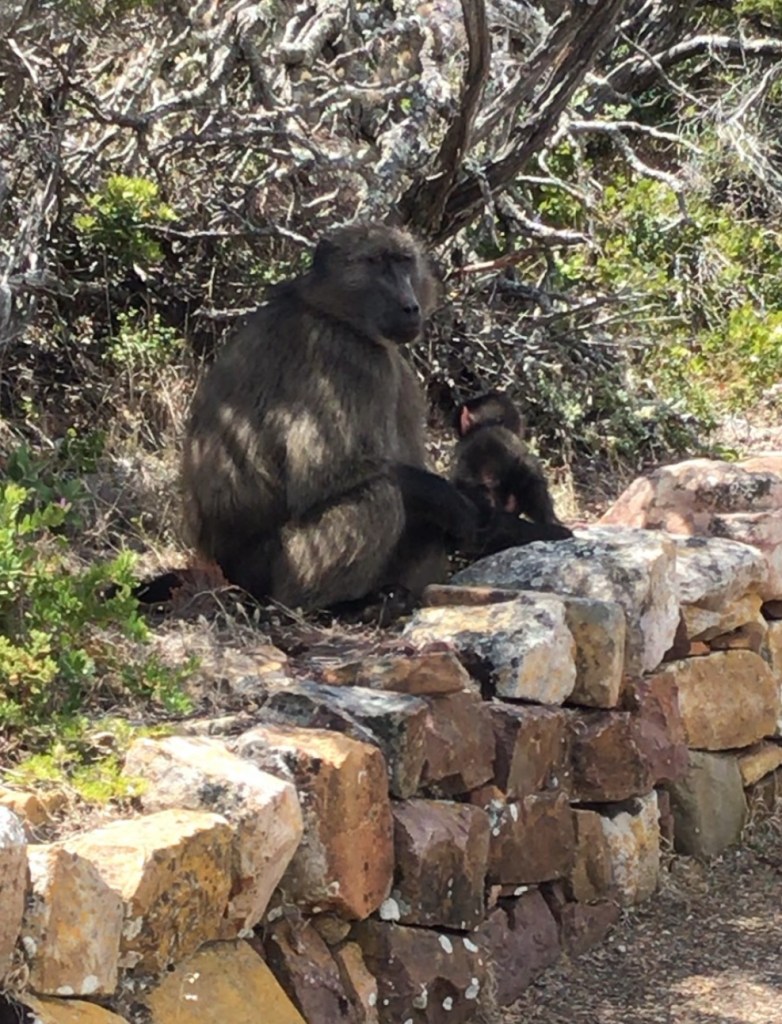
A baboon mother and child, resting in the shade in Table Mountain National Park, on the Cape of Good Hope
in South Africa

But to our surprise that day, a mother baboon with a child in tow casually crossed our path and then nonchalantly sat on a wall, seemingly oblivious to our existence. We stopped for a while to grab a video but kept our distance, out of respect.

I was inspired by that incident to read up on baboons and came across A Primate’s Memoir, by renowned primatologist Robert Sapolsky, who had spent decades living among and studying these animals in eastern Africa.

To look at them, you’d notice very few physical characteristic similar to homo sapiens. Baboons walk on all fours, have a snout that seems to be a cross between a dog and a bear, and possess enormous, menacing canines just for good measure. They have tails and sleep in trees.

And to be sure, baboons do not make things, like walls and bridges. So what do we have in common?

Baboons are very social creatures, notes Sapulsky. They live in groups ranging from a few to fifty. They “work” a four-hour day, which is all the time they need to forage for food. They sleep another 10 hours. And that provides them with a full 10 hours to interact with one another.

And interact they do. They make friends; they make enemies. They establish hierarchy that can be inherited. If you are the offspring of the alpha male, you have it made. There are prom kings and queens, and wallflowers. They woo, they mate, they raise their offspring.

They can be snobby. They might bully. They can be empathetic. They can plot and form alliances to outmaneuver rivals. They seek revenge, often very viciously. They are not above kidnapping.4

Sounds a lot like a Netflix eight-episode dramatic series. It should not be surprising, then, that baboons seem to reflect so much of human behavior, since we still share 94% of the same DNA.5

We have certainly progressed intellectually far beyond the capacity of any of our ancient ancestors. We have self-awareness, sophisticated language, arts and sciences. We build not only walls and bridges but amazing technology. But let’s face it: our emotional intelligence, or EQ in modern parlance, hasn’t evolved at the same pace. That stuff has gotta be buried very deep in that 94% DNA we have in common.

As the old saying goes, we’re just apes with nukes. And that’s never been truer — or a scarier thought — than it is today.


Curiosity, the cat, and the Doomsday Clock

FROM THE MOMENT OUR ANCESTORS descended from the trees, we have been testing the law of unintended consequences. We discovered fire, brought it into our caves, where, along with warming our hands, we inhaled smoke and developed lung cancer. We hunted megafauna to extinction. We created factories and vehicles that burn fossil fuels that are cooking our planet, which, by the way, is our one and only ride through space.6

The list of things we have tried that have backfired is seemingly endless.

The Wall hasn’t stopped people from attempting to cross the border. It has, however, created a thriving underground economy — literally. Tunneling under the wall is a big business. And coyotes — guides who charge a fee to smuggle people across the border — are making money, sometimes simply scamming destitute El Norte-bound travelers out of their last pesos.

For the most part, we’ve tested this law of unintended consequences in the physical world. We more or less understand this tangible realm. We can sense it. We can feel it. We can grasp it not only intellectually but emotionally.

But the virtual world is different. Whereas in the physical world, the intended purpose of a bridge is obviously distinct from a wall, in the virtual world, things get blurry in a hurry.

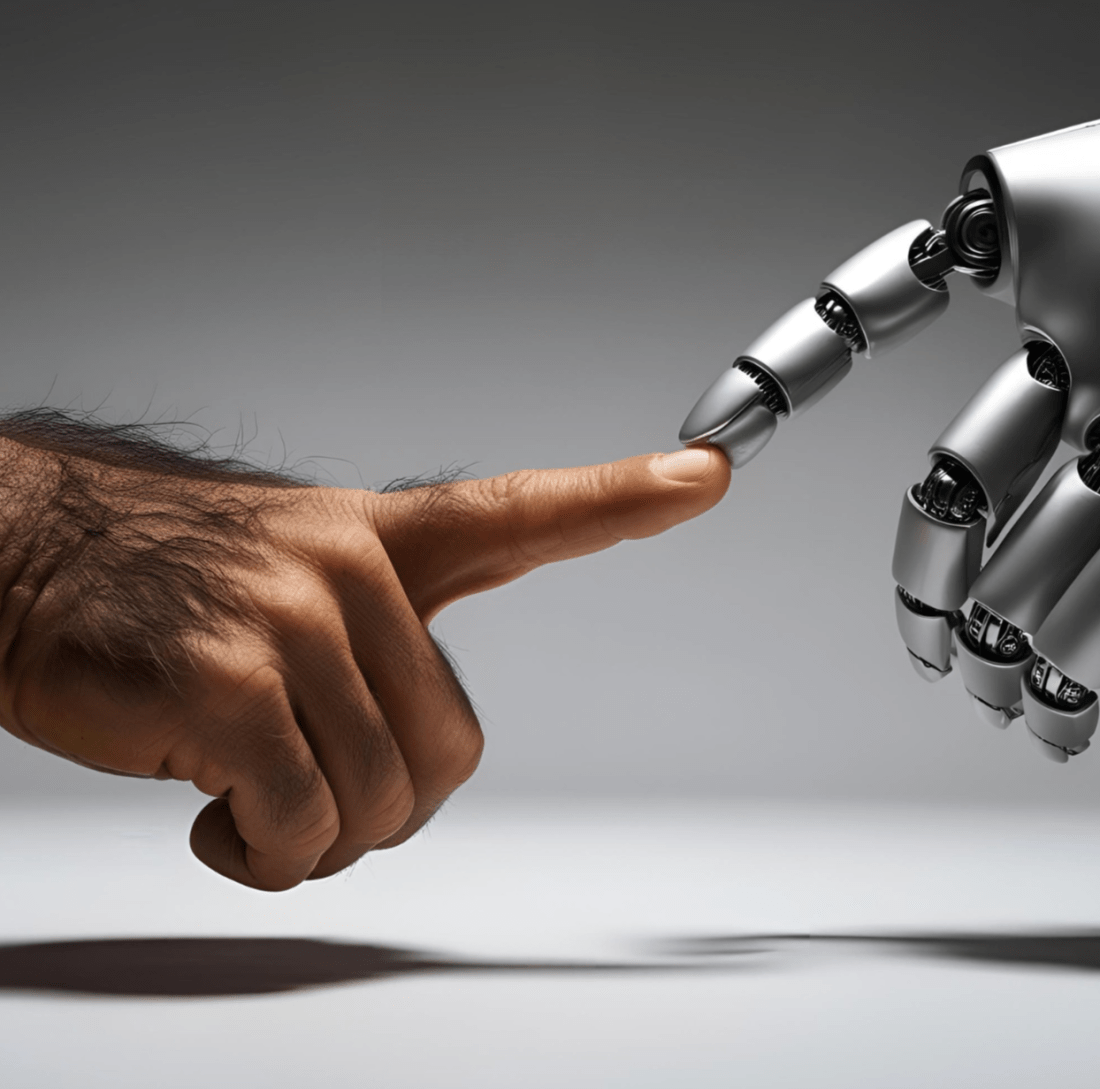
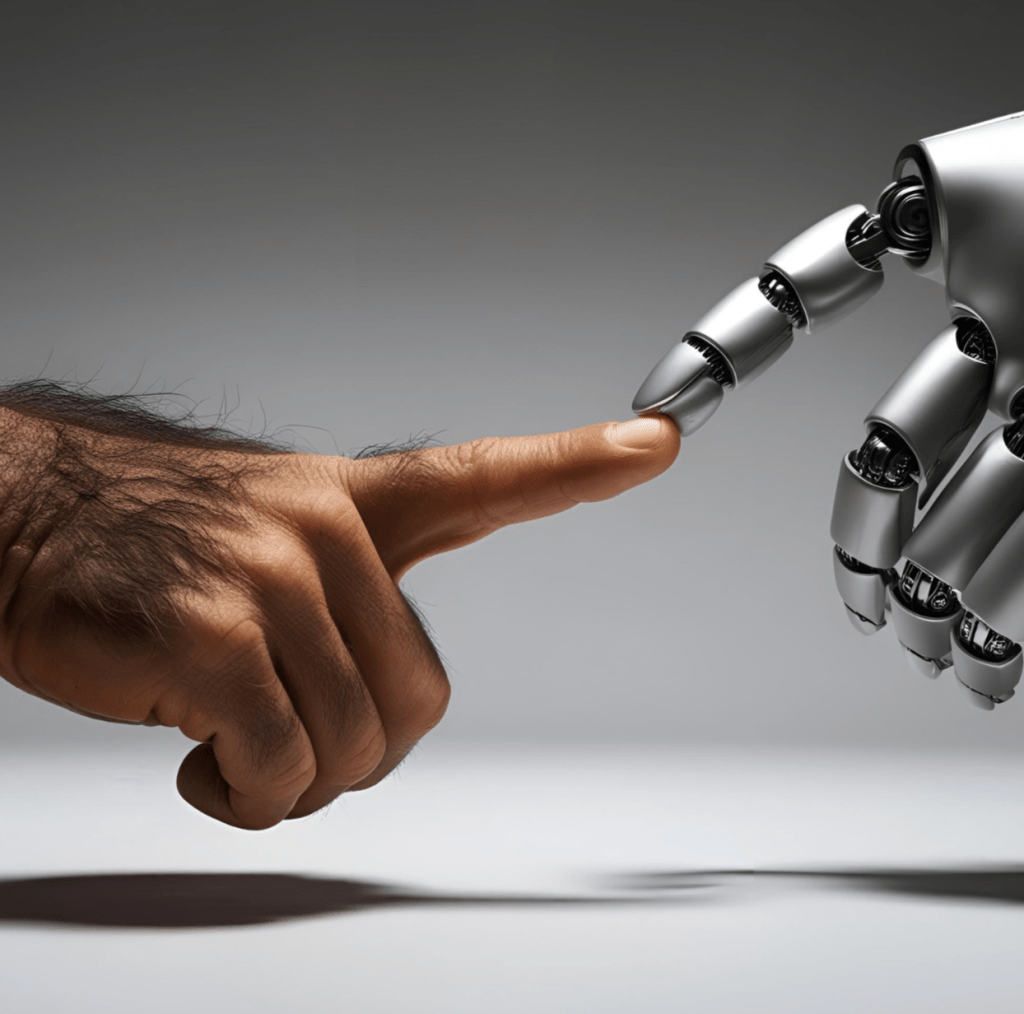
Our past meets our future: A prehistoric human hand connecting with a robot hand. Image, appropriately enough, is AI-generated.

In the 1990s I was working in Silicon Valley at the very infancy of the Internet. In those days, the buzz phrase du jour was “democratization of information.” Everyone would have an equal voice and be able to project that voice to the world. That bridge quickly became a wall when corporate interests privatized the internet, rewarding our worst instincts to drive their ad-based revenue models. And that’s where our baboon behavior just became amplified. Bullying, hate crimes, tribalism.

Emotionally, we just can’t keep up. Technology is advancing at a logarithmic pace, but the areas of the human brain that deal with emotion — the prefrontal cortex, amygdala, limbic system, hippocampus — continue to evolve linearly at, well, a snail’s pace.

In the brave new world, the scale at which our endeavors are likely to backfire is exponential.

With Artificial Intelligence (AI), we are being promised new and greater opportunities without any idea of what the scope of the consequences will be. It reminds me of the story about the moment just before the first test of an atomic weapon, when Enrico Fermi mused that there was a greater-than-zero chance the explosion would ignite the entire world’s atmosphere. 7

And yet, we did it anyway.

Curiosity may have killed the cat, but humans somehow keep on ticking.

Yes, we have somehow survived — so far. But there’s something else ticking, coming from the Doomsday Clock, which is now at a mere 89 seconds before midnight, its most dire setting since the metaphorical instrument was created in 1947. To put this into perspective, the clock stood at 7 minutes during the Cuban Missile Crisis.

Eighty-nine seconds before midnight. Will you look at the time? It’s getting late. And on that note, sleep tight.

.


FOOTNOTES

  1. Paraphrased from the poem, The Collosus, by Emma Lazarus. The poem is inscribed at the base of the Statue of Liberty. ↩︎
  2. Creative Commons License 4.0. ↩︎
  3. My reverence for bridges was further instilled by my father, a civil engineer who designed and oversaw construction of numerous spans in his career. I remember as a child driving to Long Island and crossing the newly opened Verazzanno-Narrows in 1965, then the longest suspension bridge in the world,3 as dear old Dad regaled his offspring with myriad facts about the engineering marvel holding our rattling little Rambler station wagon some 228 feet (70 meters) above the water. ↩︎
  4. Sapulsky cautions against anthropomorphism, using terms such as kidnapping to describe baboon behavior. ↩︎
  5. Even higher with chimpanzees: 96%. ↩︎
  6. Humans would not survive the massive doses of radiation they would sustain in a journey to Mars. The proposals by megabillionaire oligarchs to inhabit other planets is pure folly with today’s technology. ↩︎
  7. Fermi jokingly offered to take bets, but it’s hard to imagine anyone wagering that such a catastrophe would occur, because if it did, collecting one’s payout in a planet engulfed in flames might be a tad difficult. ↩︎